Longitudinal Small Business Survey Research Dissemination Event 2026
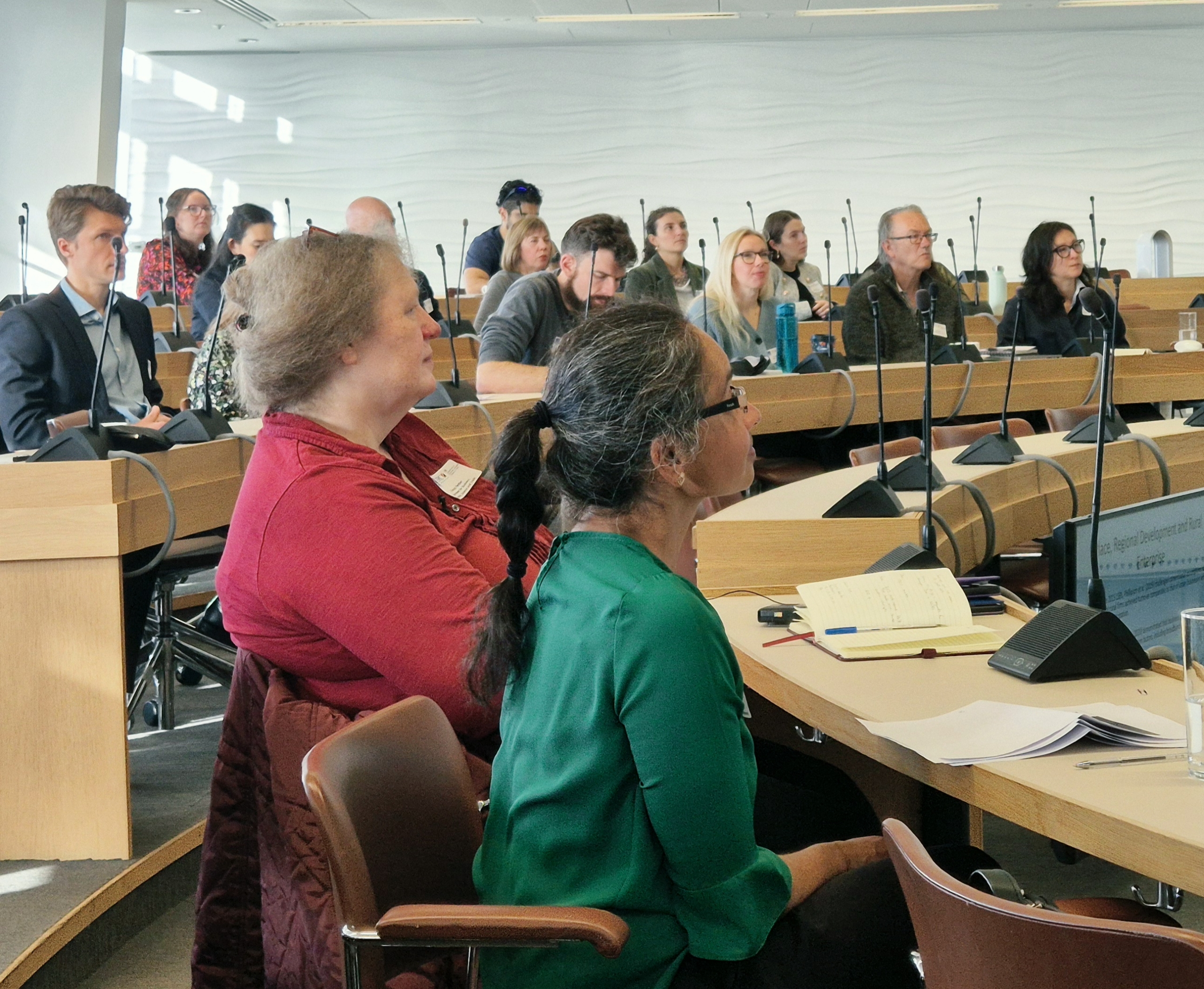
With over 10 years of data, the Longitudinal Small Business Survey (LSBS) provides the only consistent longitudinal data on UK SMEs. The Enterprise Research Centre (UK) have been involved from the beginning, creating a sophisticated body of research that has evolved from establishing baseline patterns in SME behaviour to analysing the complex interactions of the interconnected business ecosystem. On Wednesday 18 November 2026, we held our annual our LSBS Dissemination Event, launching the analysis of the 2015-2025 dataset at Warwick Business School’s The Shard campus.
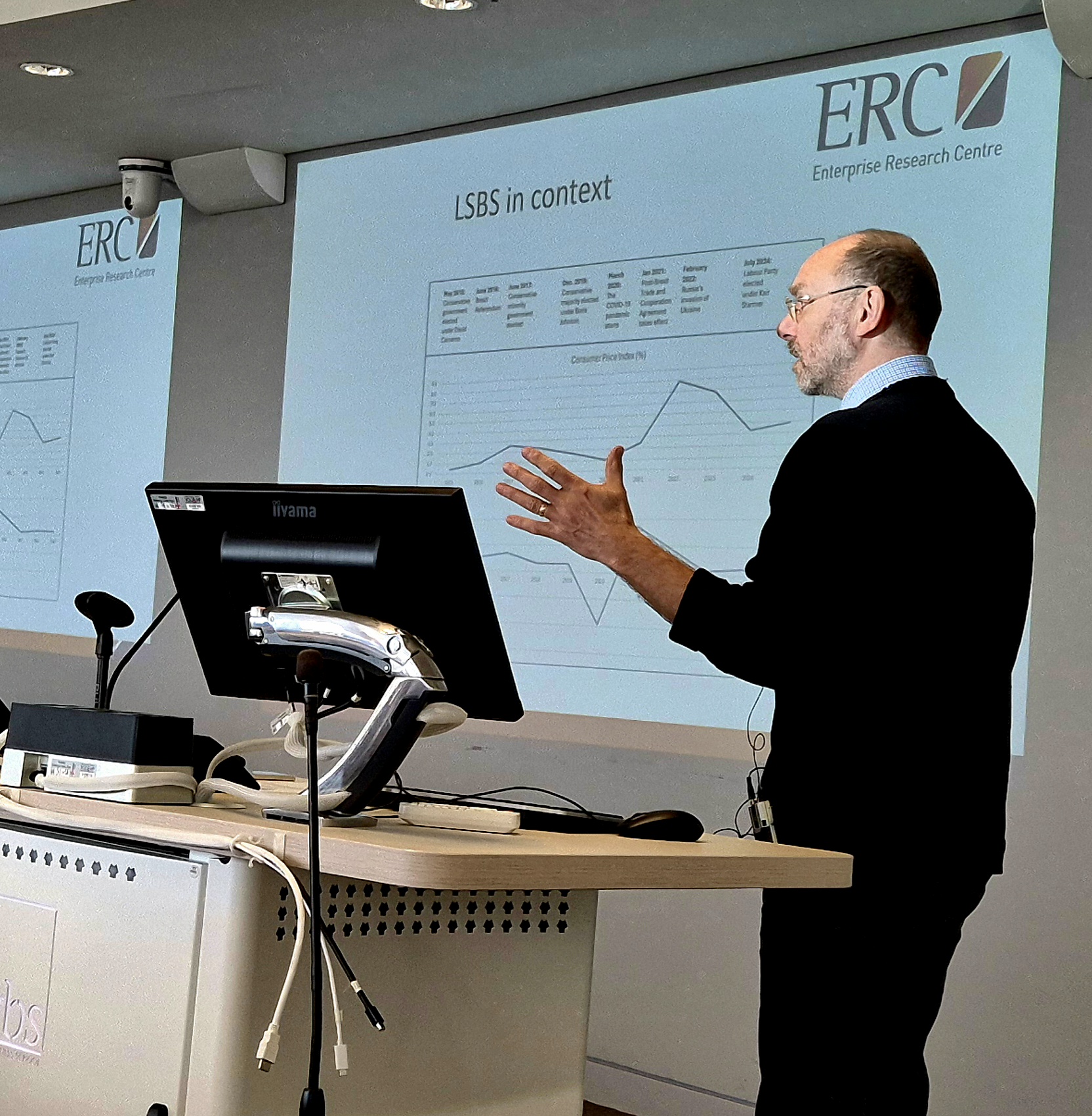
The new research from this year’s analysis explored a range of themes from small-firm climate action, to SME technology adoption and the UK’s exporting of professional services. ERC Director, Stephen Roper, opened the event with a reflection on the past 10 years of the LSBS. Against the backdrop of David Cameron’s election, Brexit, the Covid-19 pandemic and today’s AI revolution, the survey has grown to encompass more SMEs and more pertinent and emerging themes. As Roper assessed, the LSBS research has evolved in this period, going beyond simply asking “what makes firms succeed?” and instead examining how interactions among firms, institutions, networks, financial systems, local economies, and technological change shape success.
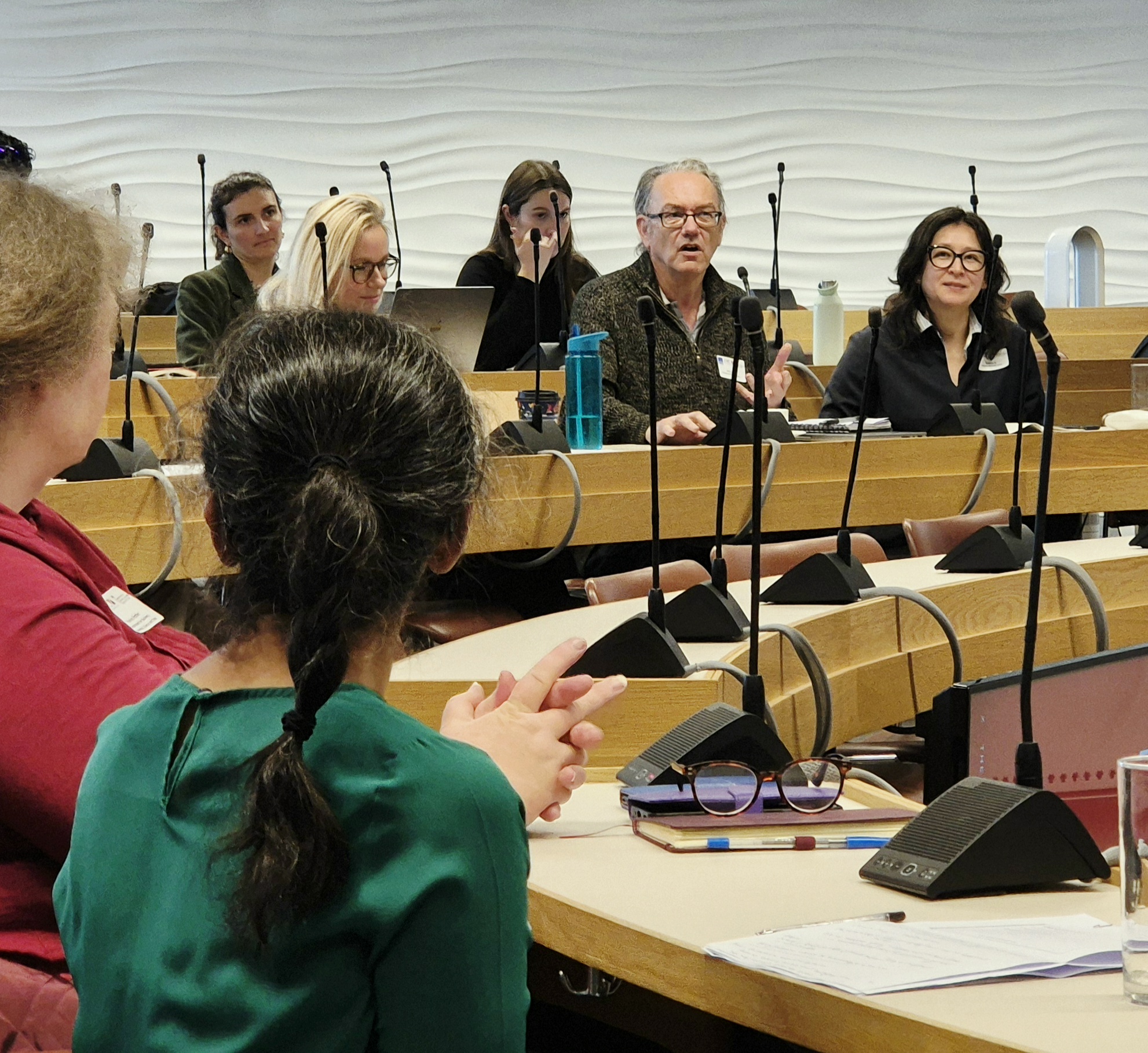
Following this introduction, presentations by Jayshree Varsani from BIST and Emma Osborne from BMG Research provided an overview of the 2025 survey’s findings alongside annual developments in its methodology and design to improve the quality and quantity of data recorded. Jayshree and her colleague, Frances Pottier (BIST), then led a discussion on future plans for the LSBS, inviting delegates to contribute their ideas on how and what data should be collected in subsequent surveys. Suggestions included:
- Increased data collection on the demographics of entrepreneurs (specifically, age or socio-economic background)
- More questions exploring firms’ attitudes and uptake of climate action
- Greater focus on SME ambition and innovation outcomes
Thank you to everyone who gave their ideas and feedback, and to the teams at BIST and BMG for their hard work in producing the survey.
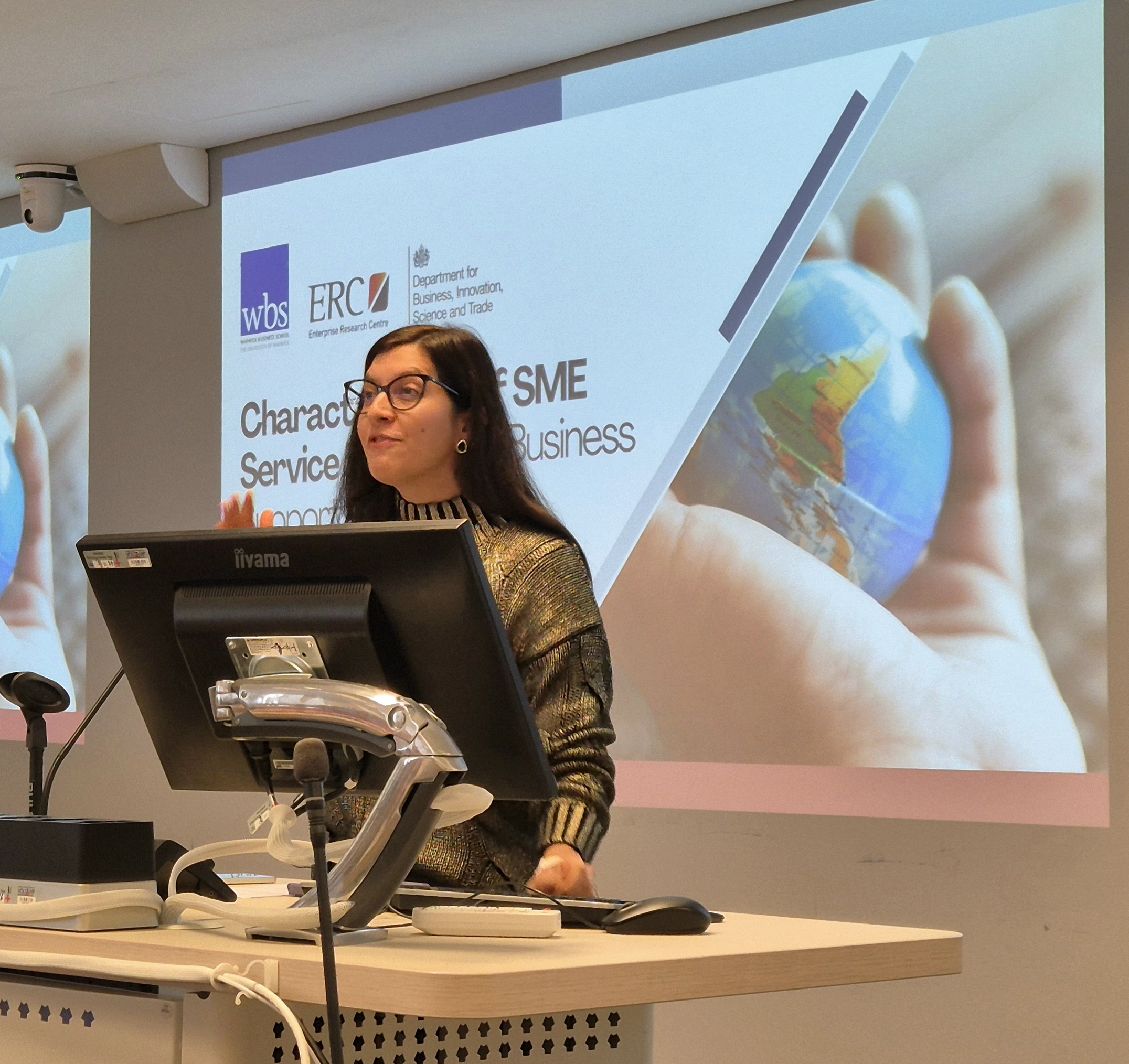
With the LSBS introduced, we heard from the first of this year’s researchers, Carolina Marín-Cadavid, who presented her and Juan Pablo Ríos Ocampo’s paper on service exporting. This study took the LSBS data on UK SME Service Exporters to provide a thorough analysis of the obstacles these companies face and how new policy can support them. Contributing much needed analysis to a limited evidence base, the paper elucidates the demographics of service exporters and the types of assistance most effective in supporting them.
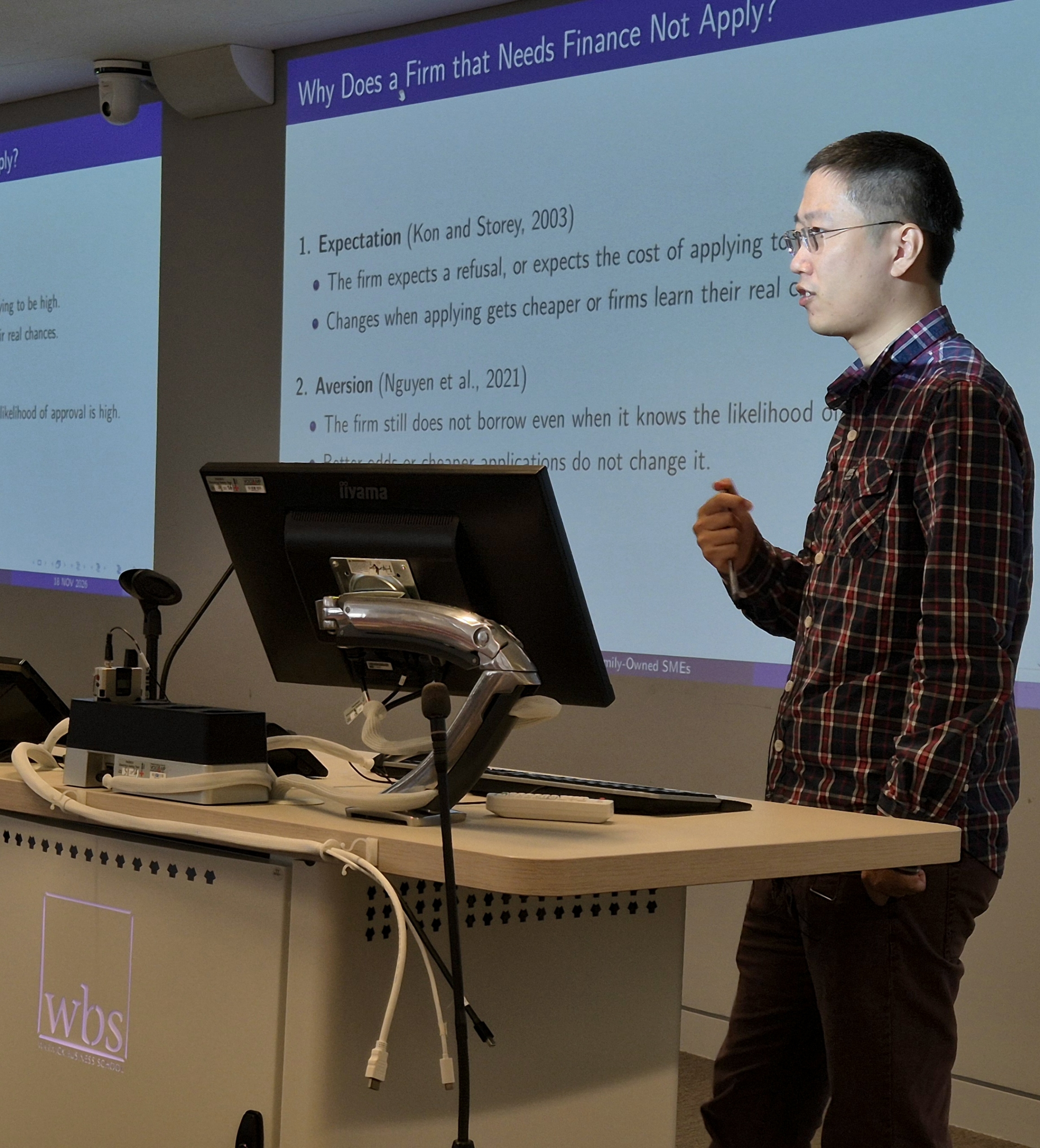
Next, Haoran Sun shared his, Ross Brown and Marc Cowling’s research into the finance, growth and productivity of family-owned firms (FOFs). This paper set out to explore the hidden credit problem of discouraged borrowers within FOFs – a group that accounts for 66.9% of multi-owner SMEs. Addressing key questions such as, “are family-owned SMEs more often discouraged from borrowing?”, the study gives crucial insight into how family firms finance themselves and their experiences with lenders compared to non-family-owned SMEs. One of the key findings hints at the different psychology often observed with family firm leadership: FOFs are more often discouraged borrowers, despite evidence suggesting that most of the discouraged would have been approved by lenders. Drawing on their observations, the authors highlighted how both policymakers and researchers would benefit from further study into the ‘factors shaping the cognitive mindset of entrepreneurs experiencing borrower discouragement’.
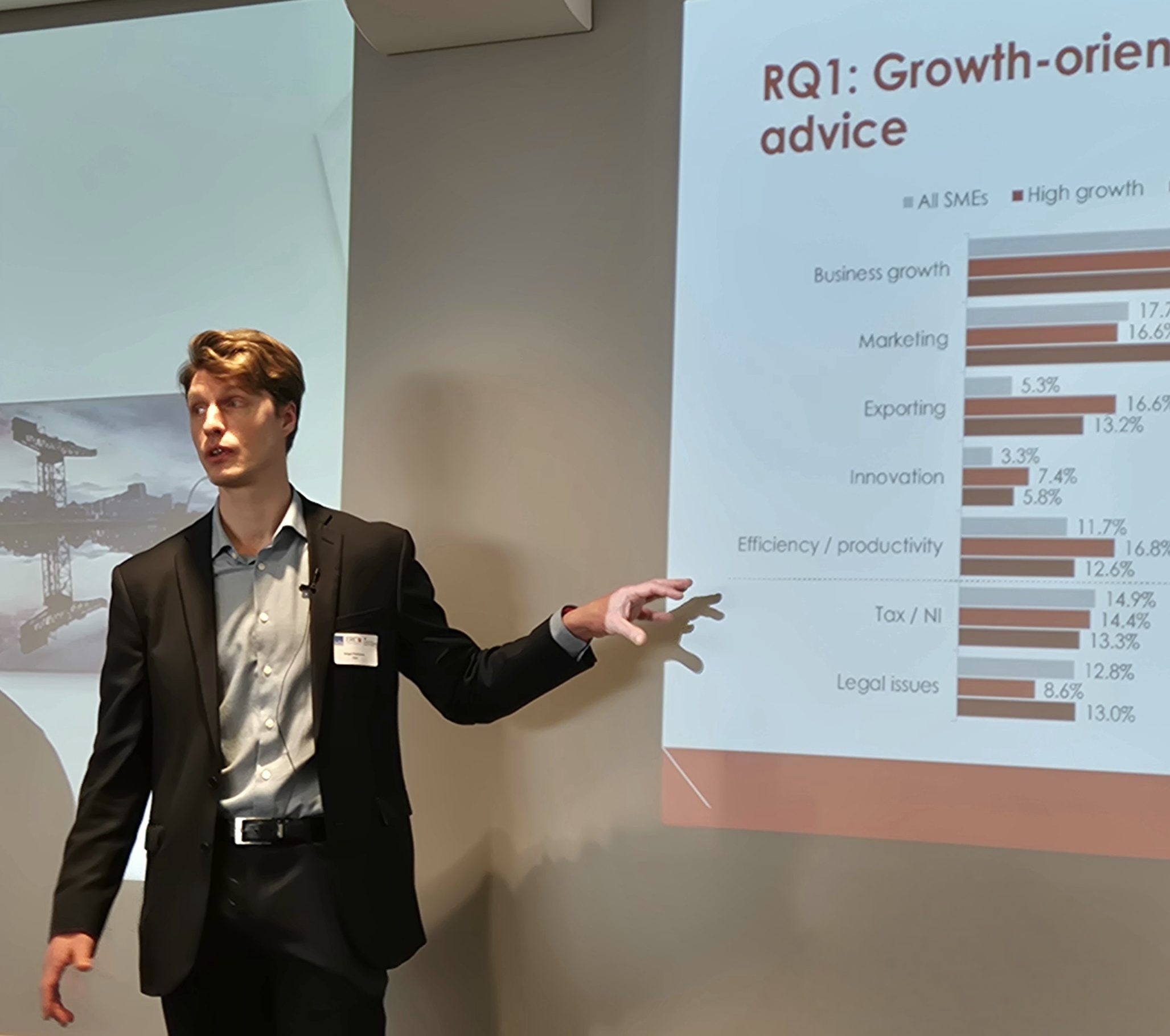
In the afternoon, presentations resumed with Osman Anwar and Sergei Plekhanov from the economic and social research consultancy, SQW, sharing their paper “High Growth Firms and Demand for Business Support”. This report endeavoured to fill and contribute to knowledge gaps such as:
- Which UK SMEs are accessing business support?
- How does the demand for support vary?
- Does the support given unlock firms’ growth ambitions?
They also wanted to understand whether the business support provided by current policy reaches firms with potential to grow, or only those that are already experiencing growth.
One of the study’s key insights into understanding the link between firm growth, ambition and access to support, was that ‘high-ambition firms are more than twice as likely to get formal growth-focused support as a non-growth-oriented SME’. SQW’s evidence suggests that today’s support systems for SMEs have more success in ‘engaging firms that are already on a growth trajectory than firms whose growth ambitions remain unrealised’. As previous ERC research by Mark Hart, UK lead for GEM – Global Entrepreneurship Monitor, suggests: the challenge for policymakers is converting business ambition into sustainable growth. “Fast-growers and dreamers require different kinds of help”, Osman told the room. Consequently, their study recommended that future policy offers more tailored support that recognises the differences between growth-oriented firms.
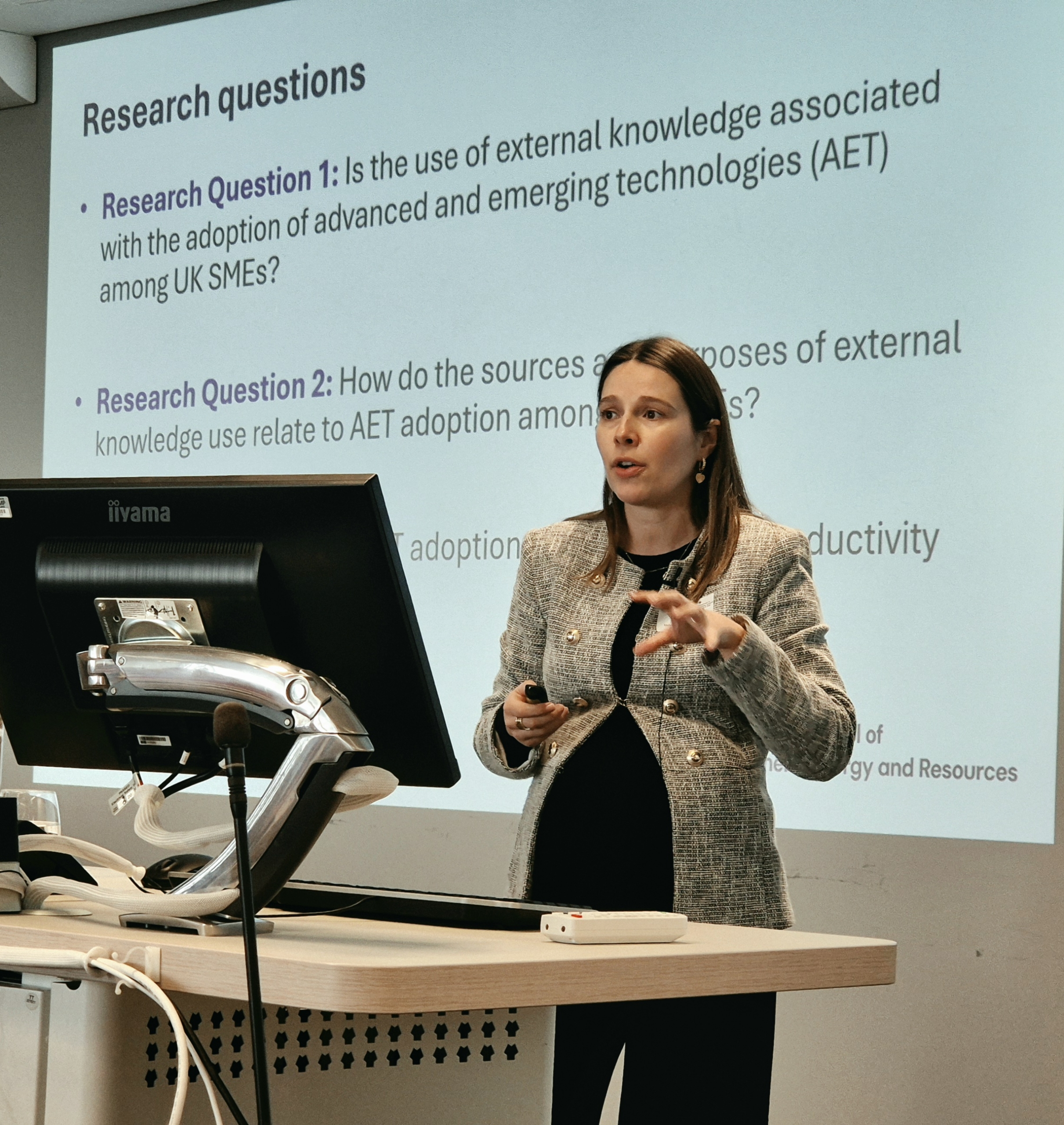
Up next, Jill Juergensen presented her, Ines Alvarez-Boulton and Jim Love’s research into technology adoption in UK SMEs. Taking data from over 7,000 firms, this study analysed multiple years of the LSBS data to tell the story of the use of AI, robotics and automation in SMEs across the country. One question this study tackled was whether the uptake of advanced and emerging technologies by SMEs significantly impacted their productivity. Initially, their data suggested that there was a positive association between technology adoption and a firm’s productivity, however, on further analysis this relationship was no longer statistically significant. With technology’s, and in particular AI’s, rapid development, even since the commission of this paper, this study proffers a solid foundation for future research, broadening understanding of how SMEs interact with advancing tech and how it shapes their outcomes.
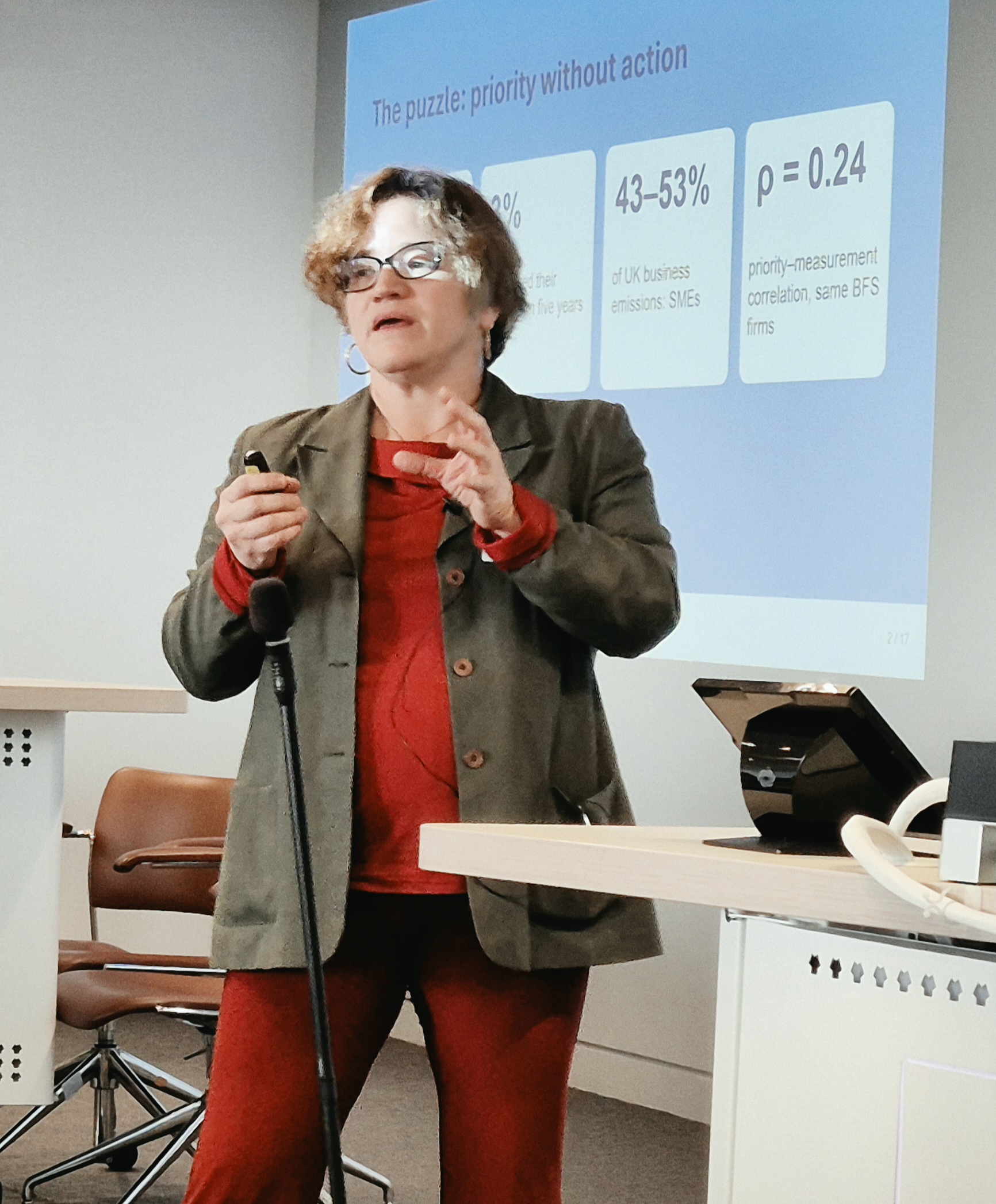
The final paper of the LSBS 2026 series was authored by Mary-Paz Arrieta-Paredes, Jin Chan and Azar MahmoumGonbadi, from the University of Greenwich. Arrieta-Paredes presented their study, ‘Conversion, not complementarity: Why UK small-firm climate action is gated by capacity, not bundled capability’. With UK SMEs accounting for an estimated 43-53% of industrial emissions, the authors point to the significance for policymakers to unlock this group’s potential for climate action if the UK is serious about reaching future Net-Zero targets. In their research, they observed a “priority-action gap” in the UK’s SMEs, with at least 50% calling decarbonisation a priority, but only ~3% even measuring their carbon footprint in the last five years. To understand this difference in rhetoric and reality, the study points to the shortcomings of existing ‘bundled’ climate policy, highlighting the need for support that builds firms’ conversion capacity, particularly for the smallest companies who naturally have a limited organisational capacity.
The dissemination event concluded with a nod to the future, as Stephen Roper emphasised the call for future LSBS research. In the new year, the ERC will be supporting applications for the 2027 LSBS paper series, welcoming proposals for analysis using this year’s 2026 survey results. Roper also encouraged policymakers to share feedback on the topics they would like to see explored in future surveys and subsequent research papers.
Thanks to the diligent execution of the 2025 survey and the wide-ranging, insightful analysis from the researchers, the ERC concluded another successful year of the LSBS series, connecting academics, policymakers, and practitioners to explore evidence-based strategies for supporting SME growth and productivity. We would like to thank all our speakers and delegates for contributing to a thoughtful and inspiring event.
Access the full papers, policy briefings and findings below:
ERC Insight paper
The Longitudinal Small Business Survey (LSBS) – Research Overview – the first 10 years by Stephen Roper (ERC)
ERC Research paper No 125
Advanced Technology Adoption in UK SMEs : What is the effect of external knowledge sources and what are the productivity outcomes by Jill Juergensen (University College London), Ines Alvarez Boulton (Aston University), and Jim Love (University of Leeds)
ERC Research paper 126
Characteristics of SME service exporters : Business support and barriers by Carolina Marín-Cad
avid and Juan Pablo Ríos-Ocampo (University of Strathclyde)
ERC Research paper No 127
A Study of Finance, Growth and Productivity in Family-Owned SMEs by Ross Brown (University of St Andrews), Marc Cowling (Oxford Brookes University), and Haoran Sun (University of Durham)
ERC Research paper 128
Conversion, not complementarity: Why UK small-firm climate action is gated by capacity, not bundled capability by Mary-Paz Arrieta-Paredes, Jin Chan, and Azar Mahmoumgonbadi (University of Greenwich)
ERC Research paper No 129
High Growth Firms and Demand for Business Support by Juraj Briskar (former SQW), Osman Anwar, and Sergei Plekhanov (SQW)